History and Origins of Isla Holbox
From a Maya Fishing Village to a Trendy Island Paradise
Updated on
|
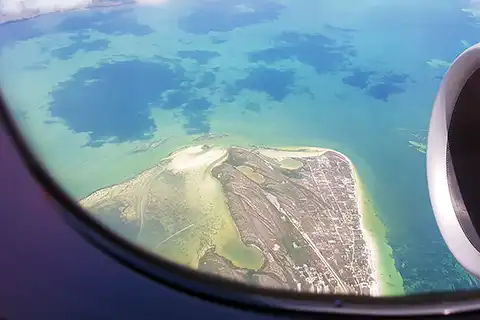
Isla Holbox (pronounced “Hol-Bosch”) is a flat coral island on the north coast of the Yucatán Peninsula in the Mexican state of Quintana Roo. It is approximately 42 km (26 miles) long and 1–2 km (0.6–1.2 miles) wide and belongs to the Yum Balam Biosphere Reserve, which protects the lagoons and mangroves. Its fascinating history begins with the Maya, continues through pirate legends and courageous settlers, and extends to modern tourism development. Today, Holbox is best known for its pristine white-sand beaches, relaxed lifestyle, and ecotourism. Join us as we explore its past and discover how this remote fishing village evolved into a popular travel destination.
Maya Origins: Why Holbox Is Called “Black Hole”
Holbox was known to the Maya long before the Spanish arrived. Archaeological research indicates that they used the island seasonally as a fishing camp. However, the island never played a significant role in Maya architecture, as there are no pyramids or other monumental buildings there. Rather, Holbox was part of the maritime economic and trade network of inland cities, such as Chichén Itzá.
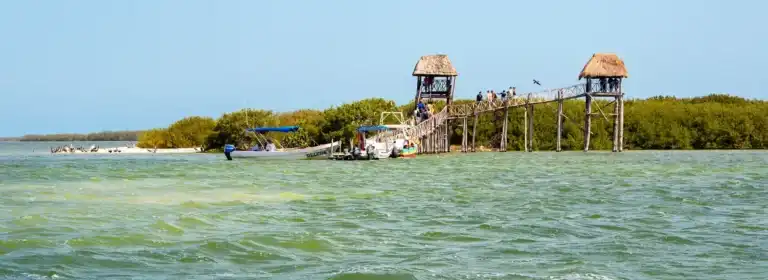
The name Holbox comes from the Maya people and means translated “black hole.” While the name might sound mysterious, it refers to the dark color of the nutrient-rich water in the mangroves of the nearby Yalahau lagoon, which separates the island from the mainland. The waters around Isla Holbox are generally very shallow, which is why the sea near the coast is usually cloudy and sometimes appears slightly greenish to brownish-black.
Incidentally, the Mayan language, also known as Yucatec Maya, is still spoken sporadically in Yucatán today. However, since it is only taught in a few schools and the older generation rarely passes it on, the language is in danger of dying out.
Colonial Period: The First Inhabitants Were Pirates
In the wild 16th century, pirates such as Jean Lafitte hid here, while the Spanish conquerors focused their attention on the mainland. The sheltered, shallow lagoon and the island’s seclusion made Holbox an ideal hideout for these legendary buccaneers. Even today, you can feel the spirit of adventure on a boat trip to the Cenote Yalahau.
The Birth of the “Holboxeños”: Resistance and Courage
It was not until the 19th century that the Spanish arrived on the island and founded a village. The earliest written record of Isla Holbox is a document from 1852 sent by military commissioner Juan Díaz and justice of the peace Don Bartolomé Magaña to the governor of Yucatán, Miguel Barbachano y Tarrazo. The mainland had previously been attacked by rebellious Maya during the Caste War (Guerra de Castas), which is why the people sought refuge on the island. The government tried to prevent them from living on Holbox, but the citizens refused to leave their homes.
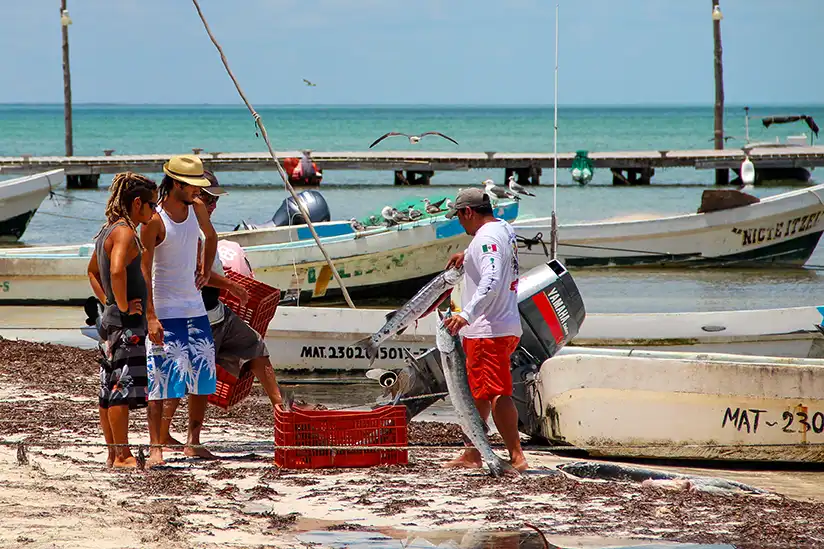
Two years later, the island’s inhabitants were officially recognized as “Holboxeños.” Holbox gradually developed into a village of fishermen and farmers who traded with the mainland of Yucatán for goods unavailable on the island. According to the 1866 census, only 30 people lived on Isla Holbox.
In the following years, additional Maya attacks in the Tulum region caused families to flee to Holbox, gradually increasing its population. Soon after, two large companies began extracting raw materials such as wood, rubber, and dyes from the surrounding jungles. This attracted numerous workers and helped the port of Holbox grow in importance.
Hurricane, Reconstruction, and Integration in Mexico
In 1886, a hurricane completely destroyed the island’s old town (formerly located near Punta Cocos) and claimed numerous lives. The governor of Yucatán at the time, Octavio Palomino, ordered the final evacuation of Holbox, but the inhabitants refused to leave the island again. They were already “as rooted as the palm trees they had brought with them from the mainland.” Thus, the authorities had no choice but to accept the inhabitants.
After the village was rebuilt on higher ground, trade resumed and small barracks and a school were built. In 1901, the population was 544, which remained largely unchanged over the next 60 years. In 1902, Yucatán was divided into individual states and Holbox was assigned to Quintana Roo.
From Wood and Rubber to Fishing Again
But then, during the Mexican Revolution (1910–1920), the large timber companies pulled out. This left fishing as the only major source of income for the inhabitants, who subsequently founded a fishing cooperative. Not much changed in the following decades, which is why the island remained relatively unknown for a long time.
Modern Infrastructure and Protection of Nature
Unlike Isla Mujeres and other places developed for tourism in the 1950s, Holbox did not receive electricity until much later. The island was officially connected to the power grid in 1987. The motorization of shipping, the installation of a telegraph, and the later construction of an airport, which was used to transport fresh lobster, finally ended its isolation.
In 1994, the area was designated the Yum Balam Biosphere Reserve, placing the island and its surrounding ecosystems under official ecological protection.
The current ferry connection to Chiquilá was only established in the 1990s, making Isla Holbox more accessible to visitors. By the way, the last major hurricane, Wilma, swept across the region in October 2005, causing severe damage to the harbor, buildings, and infrastructure. The island was completely evacuated and left to the forces of nature at the time. It took several months to repair the damage and restore Holbox to its former glory. We were indirectly affected as well, because the accommodation we had booked for early 2006 had not reopened by the time we arrived.
Tourism Boom and Current Developments
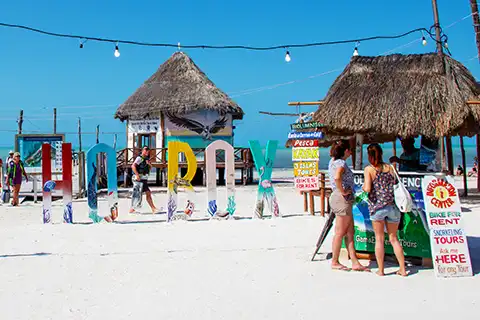
Since the 2000s, Isla Holbox has transformed from a quiet fishing village into a popular tourist destination for nature lovers and beachgoers. Between late May and mid-September, whale sharks come here to feed on plankton in the surrounding waters. The island’s long sandy beaches and mangroves make it a nature paradise not only for seabirds such as herons and flamingos, but also for reptiles and, unfortunately, mosquitoes. Fishing still plays an important role on Holbox, which is why restaurant menus are full of fresh fish and seafood.
However, many residents and environmental organizations criticize the increase in real estate and hotels caused by growing tourism. They complain about temporary overload of infrastructure, water and waste problems, as well as pressure to relax the biosphere reserve’s protection regulations. Legal disputes over the reserve’s protected status arise repeatedly. Protests, such as temporary blockades of the ferry port by residents or the two rival ferry operators, demonstrate that the conflict between the desire for higher incomes and the preservation of the island’s traditional culture and unspoiled nature remains unresolved.
Holbox Today: Identity Between Tradition and Change
Around 2,000 people currently live on Holbox. According to INEGI, the last census in 2020 recorded 1,841 inhabitants. Many continue to work in fishing, but an increasing number now work in tourism and related services.
With a few exceptions, the island’s sandy roads are still car-free and are mainly used by golf carts, ATVs, and bicycles. This contributes to Holbox’s “slow-paced” image. Additionally, the well-preserved ecosystem provides ample opportunities for leisurely excursions and sustainable nature experiences.
The vibrant culture, shaped by the Maya and Spanish colonists, remains popular today. This is evident in the numerous colorful murals depicting the lives of fishermen. Religious and traditional festivals, such as the San Telmo Festival, demonstrate the locals’ deep connection to the sea.